G196 Programme · Aurora 3550 Replacement
The Aurora 3550 is an ANSI/ASME B73.1 process pump organised in S, M, L and XL groups — the same four-band logic as the G196’s STX, MTX, LTX and XLTX frames. B73.1 is what makes a cross-make changeover reviewable: the standard fixes envelope and interface dimensions by size designation, whichever nameplate is on the frame. YSM’s G196 programme manufactures to that dimensional logic, so an installed 3550 can be replaced by the G196 of the same size and group — confirmed on drawings and nameplate data before anything ships, with the hydraulics re-selected on a size-specific curve.
G196 series-level maximums; working pressure to 375 psig (2,586 kPa). The replacement size and frame, and its limits, are confirmed from the installed pump nameplate and drawing on a reviewed, size-specific curve.
The 3550 Changeover and the G196 Programme
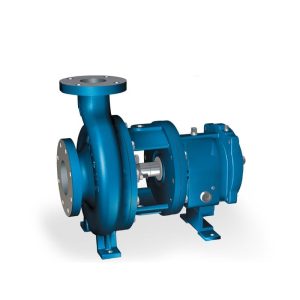
A 3550 runs the industries the G196 was drawn for — chemical and petrochemical transfer, pulp and paper auxiliaries, general industrial process duties — so a changeover rarely changes what the pump is asked to do; it changes who stands behind the iron. When the installed pump reaches the end of a rebuild cycle, the path splits: keep it on parts, or change it over and reset the maintenance clock. This page carries the changeover path. The G196 is YSM’s B73.1 open-impeller programme — open impeller with external adjustment, back pull-out power end — with the wet-end and power-end manufacturing scope documented across this site.
Series context
G196 Series ANSI Chemical Process Pumps
The family page carries the published size list, the frame parts-commonality charts, the performance coverage curves and the interchangeability tables — the reference material a changeover review reads from.
View the G196 SeriesParts path
Replacement Parts Center
If the honest answer is parts rather than a pump, the parts programme covers casing to feet for B73.1 pumps of the referenced patterns, with the identification and ordering routes.
Open the Replacement Parts CenterGroup Mapping: S–XL to STX–XLTX
Both families band their hydraulics into four power-end groups under the same standard, so the mapping below is read first by group, then confirmed by the nameplate’s size designation against the published G196 grid. Sizes read discharge × suction − nominal impeller diameter in both catalogues.
| Installed 3550 group | G196 frame reviewed against | Published G196 sizes in that frame |
|---|---|---|
| S | STX | 1×1.5-6, 1.5×3-6, 2×3-6, 1×1.5-8, 1.5×3-8 |
| M | MTX | 2×3-8 through 4×6-13, including selected G and H variants |
| L | LTX | Same size band as MTX, carried on the heavier power end |
| XL | XLTX | 6×8-13, 8×10-13, 6×8-15, 8×10-15, 8×10-15G |
A designation outside the published list is reviewed case-by-case against the family’s manufacturing base rather than promised from a table.
Aurora and 3550 are trademarks of their respective owners, used here for identification and cross-reference only. YSM Pumps is an independent manufacturer and is not affiliated with, sponsored or endorsed by the trademark owner. Interchangeability refers to dimensional interchangeability of the referenced standard designs; size, group and configuration are verified from the pump nameplate before any order.
Quick Selection Summary
The envelope below is the G196 series-level published range — the frame inside which a 3550 duty is re-selected. Send the duty the installed pump actually runs, or the original selection data, and the review confirms the size on its own curve.
| Standard | ANSI/ASME B73.1 | Pump type | Horizontal end-suction process pump |
|---|---|---|---|
| Impeller | Open impeller; external adjustment | Frames | STX, MTX, LTX, XLTX |
| Series flow | Up to 7,000 US GPM (1,590 m³/h) | Series head | Up to 730 ft (223 m) |
| Series temperature | Up to 700°F (371°C) | Series pressure | Up to 375 PSIG (2,586 kPa) |
Important: these are series-level maximums, not guaranteed limits for every size. Final limits depend on selected size, speed, material, seal and operating conditions.
What Carries Over, What Is Reviewed
A cross-make changeover holds together because the responsibilities are split cleanly: the standard owns the dimensions, the review owns the decisions.
Carried by the standard
For a same-size, same-group changeover confirmed from nameplate data: the envelope and interface dimensions on the B73.1 grid — centreline heights, foot pattern, flange positions — the letters on the installation drawings below. This is what keeps the exchange a bolt-down rather than a re-pipe.
Confirmed at changeover
The hydraulic selection on the size-specific curve; wetted materials against the liquid as it runs today; seal chamber and sealing plan; coupling, guard and motor-frame compatibility; baseplate condition and grout. A changeover is also the cheapest moment to correct a selection the service has drifted away from.
Design Features
Nothing on this list should read as novel to a 3550 operator — that familiarity is the point of a standards-based changeover.
Wet end
Open impeller, externally adjustable, in the full spread of published casing, impeller and cover materials. The external adjustment matters on the day wear shows up in the numbers: clearance is restored with the pump in place, recovering head and efficiency without a strip-down.
Seal area
Standard, large-bore and taper-bore seal chambers with packed-box and mechanical-seal arrangements. The chamber sets the seal’s volume, circulation and solids behaviour, so the changeover review confirms chamber and sealing device as one decision.
Power end
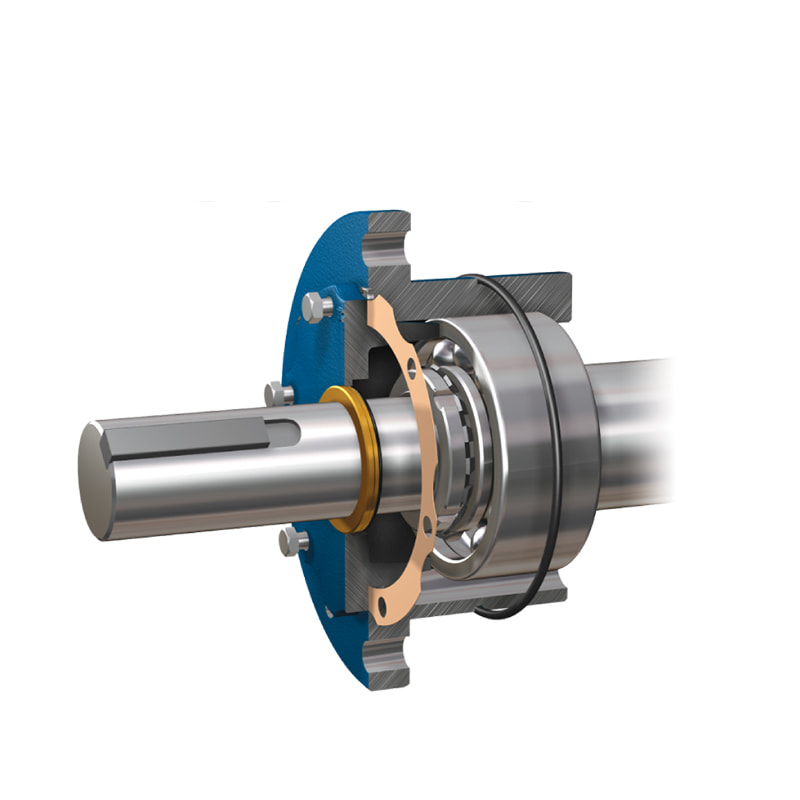
SKF or equivalent bearings, bronze or stainless steel labyrinth isolators, sleeved and sleeve-less shaft combinations. Non-contact isolators keep wash-down water and process vapour out without a wearing lip, and every component stays conventional and sourceable.
Materials of Construction
Replacement is a materials checkpoint: carry the installed alloy over like-for-like, or upgrade where the service has outgrown it. Alloy names cross to the cast grades YSM publishes as follows:
| Commonly specified on the installed pump | YSM published wet-end option |
|---|---|
| 316 stainless steel | CF8M (cast 316) |
| Duplex CD4MCu | CD4MCu |
| Alloy 20 | CN7M |
| Carbon steel | WCB |
| Hastelloy B / C | Hastelloy B & C |
| Nickel | 100% Nickel |
| Monel | Monel |
| Titanium | Titanium |
| Zirconium | Zirconium alloy |
Where the installed casing is ductile iron, the review proposes the closest published G196 option — WCB carbon steel or a stainless grade — against the liquid, concentration and temperature. A material name is not a compatibility conclusion; the material input checklist prepares that review.
Seal and Shaft Options
Chamber, sealing device and shaft arrangement form one system; a changeover reviews them together, not sequentially.
Seal environment
Packed-box and mechanical-seal wet ends across standard, large-bore and taper-bore chambers. State the liquid’s solids content, vapour behaviour and flush constraints in the enquiry — they decide which chamber gives the seal the environment it needs.
Shaft arrangements
Sleeved and sleeve-less shafts in several shaft and sleeve alloys. A sleeved shaft carries a renewable wear surface; a solid shaft maximises stiffness at the seal faces. The arrangement is matched to liquid, pressure, temperature and site practice during review.
Scope: Complete Pump, Bare Wet End, or Parts
Three scopes answer a 3550 enquiry, and naming the right one in the first message saves a review cycle.
Complete pump
The changeover path this page describes: a G196 of the same size and group, configured to the reviewed duty, materials and sealing plan, and confirmed from nameplate data before order.
Bare wet end
Where the power end is serviceable, a wet end built under the same review discipline. B73.1 fixes the pump’s external interfaces, not the internal frame joints — so wet-end-onto-installed-frame proposals travel through drawing or sample evidence, never through assumption.
Parts for the installed 3550
Part-level interchange into an installed 3550 is not assumed from pump-level dimensional logic. Obsolete or undocumented parts follow the reverse-engineering path — drawing, sample or dimensioned photographs — at the Replacement Parts Center.
Part numbers and sectional drawings
Part positions, YSM references and the OEM numbers they are quoted against are published once, on the parts pages, rather than repeated on every changeover page. The STX, MTX and XLT-X sectional drawings and the full frame-by-frame list are there:
- Goulds 3196 pattern pump parts — casing, impeller, cover, adapter, bearing frame, shaft and sleeve references by frame and size, with the sectional drawings.
- Replacement ANSI pump parts — the full cross-reference across the G196 and D Mark III programmes.
- Pump part number lookup — start from a single part number.
All part numbers shown on those pages are for identification only. All parts are non-OEM and manufactured by YSM.
Installation Dimensions
The G196 reference drawings below carry the dimensional vocabulary a changeover review is conducted in: the outline elevation locates CP, X, D, Y, F and U; the foot plan carries E1, E2, F and H. Read the installed pump’s nameplate size and group first, then the same-designation G196 row. Confirm against a certified drawing for the specific size and configuration before construction.
Click a drawing to enlarge.Tap a drawing to open the full-resolution file.


Planning a 3550 Changeover?
Send the nameplate photo — model, group, size designation and serial — with the duty as run today, the liquid data and the motor details. The reply is a reviewed proposal naming the G196 size and frame, materials, sealing plan and scope. Pump down? Say so in the first message: the urgent parts RFQ checklist collects operational priority, identification and delivery data in one request.
Interchange guides: Goulds 3196 replacement manufacturers compared · G196 vs Goulds 3196 — what ASME B73.1 fixes and what is confirmed before order.
Aurora 3550 Replacement FAQ
Can the G196 replace my Aurora 3550 without re-piping?
For the same size designation and group, yes: the G196 is built to the ASME B73.1 installation dimensions, so mounting, nozzle sizes and locations and the input shaft match. Fit is confirmed from your nameplate data — size designation, group and configuration — and the installed pump drawing before any order is accepted.
My 3550 is marked S, M, L or XL — which G196 frame replaces it?
The same-position frame in the mapping table above: S reviews against STX, M against MTX, L against LTX and XL against XLTX. The pairing is confirmed from the nameplate’s size designation and group, not from the group letter alone.
Can the existing baseplate, piping and motor stay?
The B73.1 grid carries the envelope and interface dimensions for a same-size, same-group changeover, which is what keeps baseplate and piping in place. Coupling, guard and motor-frame compatibility, and the baseplate’s actual condition, are confirmed during the review.
Will the replacement perform identically to the 3550 it replaces?
It is re-selected, not cloned. The duty point is confirmed on a reviewed, size-specific G196 curve; the published series envelope frames the range, and the curve decides the operating point. A selection the service had drifted away from gets corrected here, not copied.
Do you supply spare parts for an installed 3550?
Part-level interchange into another maker’s pump is not assumed from pump-level dimensional logic. Parts enquiries for an installed 3550 travel the reverse-engineering path — drawing, sample or dimensioned photographs — through the Replacement Parts Center.
Which materials can the replacement be built in?
CF8M, CD4MCu, CN7M, WCB, Monel, 100% Nickel, Hastelloy B and C, Titanium and Zirconium alloy per the published materials structure. Availability is not a chemical compatibility approval — send the liquid, concentration and temperature for review.
What data closes a replacement review in one cycle?
A nameplate photo; the duty as run today; liquid composition, concentration, temperature, specific gravity, viscosity and solids; the wetted material and sealing arrangement in service; motor voltage and frequency; and whether the baseplate and motor are intended to stay.
How is pricing confirmed?
Quotations are issued against a reviewed selection — size and frame, materials, sealing, scope and quantity — not against a model name alone. Send the nameplate and duty data; the quotation then references the size-specific configuration it prices.
What are the lead time and warranty for this pump?
Typical lead time is 4 weeks for a complete pump, 2 weeks for a bare wet end and 1 week for replacement parts, from deposit and approved drawings. Warranty is 12 months from shipment against defects in materials and workmanship within the reviewed duty. Late shipment attributable to YSM is compensated at 0.5% of contract value per week, capped at 5%.
What are the payment and delivery terms?
30% T/T deposit within 7 days of order, 70% T/T before shipment, or irrevocable L/C at sight; export-grade wooden-case packing; any Incoterms 2020 term (EXW Zibo, FOB Qingdao, CIF, DAP/DDP) as agreed in the quotation. Factory witness testing and third-party inspection (SGS, BV, TÜV) are accepted. Full terms: Commercial Terms