
Chemical transfer application guide
Chemical Process Liquid Transfer Pumps
Chemical liquid transfer is not a single pump duty. The same flow rate can carry very different risks once the liquid's concentration, temperature, vapour pressure, viscosity, solids content or suction arrangement changes. YSM reviews the complete process duty before recommending an ANSI process-pump route, a material of construction or a seal arrangement.
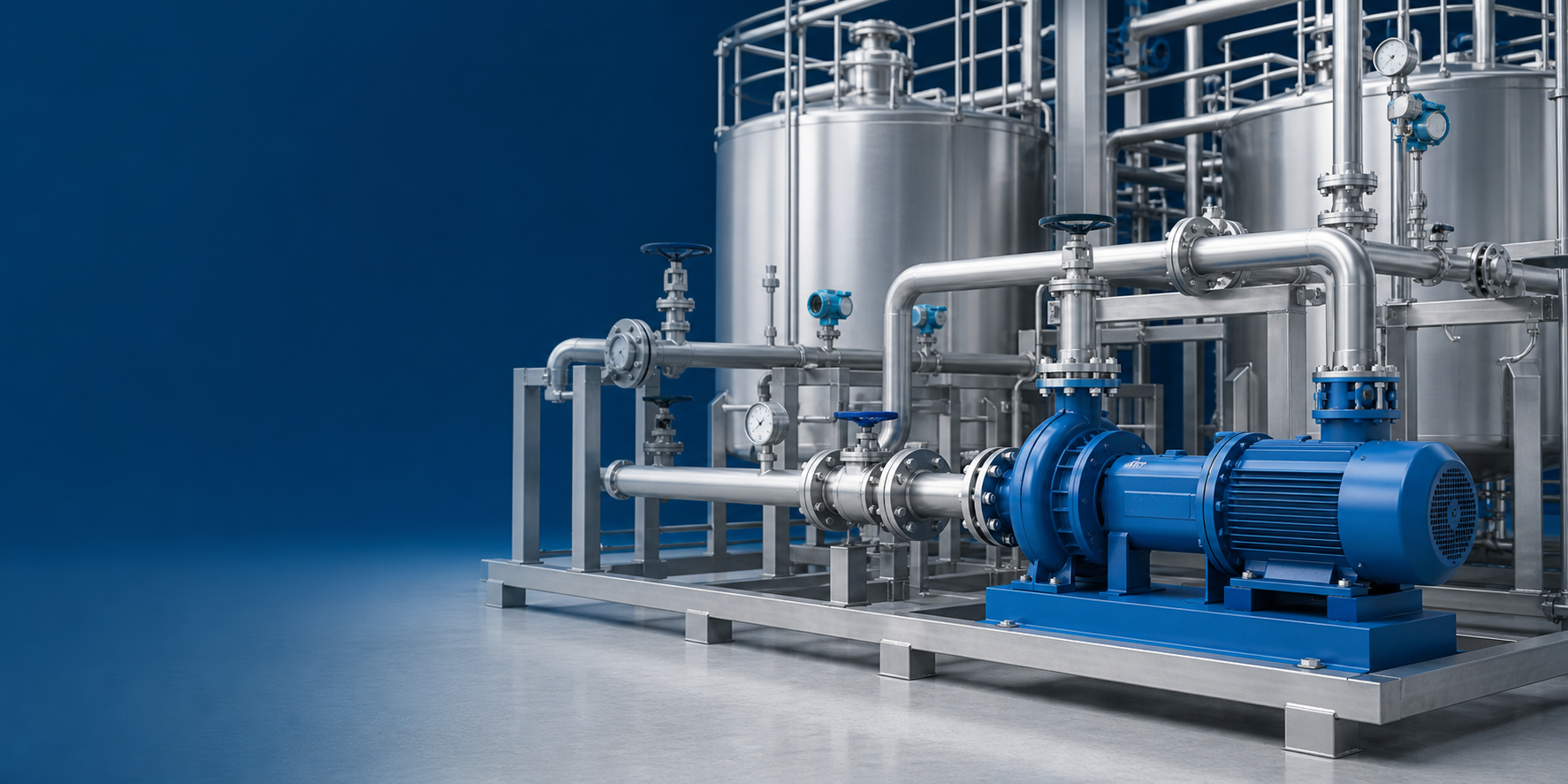
Conceptual application visual
Who this page helps
One application page, four buyer perspectives
The same chemical-transfer duty creates different questions for maintenance, EPC, distributors and replacement teams. Start with the route that matches your responsibility.
A “stainless-steel chemical pump” is not yet a complete specification.
Process plants & maintenance
Most concerned with reliability, seal life and unplanned downtime on the actual liquid. The failure modes below are the reasons a nominal selection can still fail in service.
Engineering & EPC
Need a parameter match, wetted-material schedule, standards and inspection documents. The information checklist below supports a project specification.
Distributors & importers
Focus on product coverage, installation fit and parts support across a range of reviewed duties.
Replacement enquiries
Need a dimensional review against an existing installation. Send the nameplate, model, size and photographs so the scope can be confirmed.
Failure-mode first
What Actually Goes Wrong in Chemical Transfer
A duty that looks simple on a flow-and-head basis can fail for reasons that have nothing to do with reaching the flow. Understanding the common failure modes separates a lasting selection from a repeat problem.
Corrosion and alloy choice
316 stainless resists many services, but chlorides, concentration, contaminants or higher temperature can change the corrosion risk. Material is confirmed against the complete liquid description—not a material name alone.
Review material-selection inputsCavitation on volatile or hot liquids
A liquid near its boiling point, or a warm liquid on lift suction, can flash to vapour at the impeller eye. This is a suction-side duty question reviewed through NPSH available and margin.
Review NPSH and cavitationCrystals, fibres and abrasive solids
Crystallizing liquids, fibres or abrasive particles can change effective duty, increase wear or create blockage risk. They may require different hydraulics, materials or speed.
Review viscosity and solidsViscosity beyond the water curve
A viscous liquid can reduce delivered head, flow and efficiency while increasing absorbed power. The selection must use viscosity at pumping temperature rather than a water curve alone.
Understand the pump curveDry running and priming
Batch and tank-to-tank transfer may start against an empty or partly empty suction. Priming conditions, suction geometry and dry-running risk can point to a separately reviewed self-priming route.
Confirm the operating patternDuty point
Provide normal, minimum and maximum flow where available, with total dynamic head. Static lift alone is not the full head; pipe length, fittings, valves, equipment losses, tank pressure and changing levels all move the operating point. See pipe friction and system head.
Complete liquid description
State the liquid, concentration, operating and cleaning temperature, density, viscosity, vapour pressure if known, and whether crystals, fibres or suspended solids are present. Identify batch changes, contamination and upset conditions.
Suction system
Confirm whether the source is flooded or below the pump, the minimum liquid level, suction pipe size and length, available pressure, site elevation and any chance of air entering the line. These conditions decide priming and NPSH margin.
Operating pattern
Tell us whether the pump runs continuously, intermittently, on batch transfer or under a control valve or variable-speed drive. The whole operating range is checked against the pump curve—not one nominal point.
Material and seal requirements
Material selection covers all wetted components—impeller, cover, shaft sleeve, seal faces, elastomers and gaskets—not only the casing. The seal arrangement is chosen from the same liquid and duty; see mechanical seals. Include any plant-approved material specification with the RFQ.
Product-family route
Choose a Platform After the Duty Is Understood
Both YSM families are ANSI/ASME B73.1 process-pump platforms available in multiple wet-end material routes for reviewed industrial duties.

G196 Series
An open-impeller platform with external impeller adjustment, multiple seal-chamber options and multiple materials of construction across several frame groups.
- Open impeller
- External adjustment
- Multiple seal options
- Reviewed material routes

D Mark III Series
A reverse-vane platform with external impeller adjustment, multiple seal-chamber options and multiple construction materials for reviewed process duties.
- Reverse-vane design
- External adjustment
- Multiple seal options
- Reviewed material routes
Quotation package
Documents to Request With a Quotation
Depending on the project stage, request the evidence needed to review the offer rather than relying on general claims.
- Proposed pump size
- Performance curve
- Outline drawing
- Material schedule
- Seal arrangement
- Motor data
- Inspection-document scope
- Replacement cross-check
Replacement enquiries should also include the existing model, nameplate, sectional drawing, part number and clear photographs.
Submit Your Chemical Transfer Duty
Send your flow and head, liquid and concentration, temperature, density, viscosity, solids, suction conditions and operating pattern. You will receive a preliminary pump-family and material route, plus a clear list of what still needs confirmation before a model, curve or quotation is issued.
Buyer questions
Frequently Asked Questions
Why is 316 stainless not automatically right for my chemical?
316 handles many services, but chlorides, higher concentration or temperature can cause pitting or stress-corrosion cracking. The chemical, concentration, temperature, contaminants and all wetted components are reviewed before an alloy is confirmed.
Can you select a chemical transfer pump from flow and head only?
No. Flow and head define part of the duty, but liquid properties, suction conditions, materials, seal arrangement and operating range can all change the selection.
Can one pump cover several different chemicals?
Only after each liquid and operating condition has been checked. A material or elastomer suitable for one batch may not suit another.
What should I send for a replacement enquiry?
Send the pump nameplate, existing model and size, serial or order number if available, part numbers, photographs, drawings, current duty and reason for replacement.