
Pulp and paper application guide
Pulp and Paper Pumps
Pulp and paper pumps move fibre stock, cooking and recovery liquors, bleaching chemicals, white water and effluent through a mill. Low-consistency stock, up to about 6%, runs on heavy-duty end-suction stock pumps; medium-consistency stock needs fluidising MC pumps; most liquor and chemical transfer runs on ANSI process pumps. Consistency, entrained air and abrasion decide the selection.

Definition
What are pulp and paper pumps?
Pulp and paper pumps are the centrifugal and positive-displacement pumps that transfer, circulate and feed the liquids of a pulp or paper mill: fibre stock at low and medium consistency, white water, black, green and white liquor, bleaching chemicals, filler and coating slurries, raw water and effluent. Most of them are centrifugal.
What separates them from general industrial pumps is the stock. Fibre suspensions carry entrained air, behave as non-Newtonian fluids and change consistency from one process step to the next, so a stock pump is selected from the stock data and the suction arrangement, not from a clean-water duty point alone.
Low-consistency stock
Up to about 6% fibre: heavy-duty end-suction stock pumps with open impellers.
Medium-consistency stock
About 8–15%: MC pumps that fluidise the stock and remove air.
Liquors and chemicals
Black, green and white liquor, filtrate and bleach chemicals: ANSI process pumps.
Solids, sumps and water
Non-clog pumps for rejects and effluent, sump pumps for pits, split-case pumps for water.
Mill map
Pump types by mill area
Each process area has its own dominant liquid and failure mode. The table maps common duties to the pump type usually applied and to the YSM product family that reviews it.
| Mill area | Typical pumped liquids | What makes it hard | Pump type usually applied | YSM route |
|---|---|---|---|---|
| Water intake and supply | Raw river or well water, mill process water, cooling water | Large flows, intake submergence, sand carried in from the source | Vertical turbine pumps at the intake; double-suction split-case pumps for supply and cooling | KVT vertical turbine; S Series split case |
| Pulping and brown-stock washing | Low-consistency pulp, medium-consistency washer discharge, washer filtrate, weak black liquor | Hot liquor, air released at the washers, fibre carried into the filtrate | Heavy-duty stock pumps for low-consistency pulp; MC pumps for washer discharge to storage; ANSI process pumps for filtrate and liquor | G 3175 / 3180 / 3185; G196 / D Mark III |
| Bleaching | Medium- and low-consistency stock between stages; chlorine dioxide, peroxide, caustic and acid | Oxidising and chloride-bearing liquids; air in medium-consistency stock | MC pumps for tower and stage feed; alloy ANSI process pumps for chemicals and filtrate | G196 / D Mark III for chemicals and filtrate, material chosen from the liquid. MC stock pumps are not in the YSM range |
| Chemical recovery | Weak and heavy black liquor, green liquor, white liquor, lime mud | Heavy black liquor is hot and viscous; green-liquor dregs and lime mud abrade; liquors scale | ANSI process pumps for liquor transfer; heavy-duty process pumps for large-flow liquor and circulation duties; wear-resistant slurry pumps for lime mud and dregs | G196 / D Mark III; G 3175 / 3180 / 3185 for high-volume duties; DW wear-resistant for abrasive slurry |
| Stock preparation (virgin and recycled fibre) | Pulper dump, blend and machine chest stock, cleaner feed, rejects | Plastics, sand and wire in recycled fibre; air drawn in by chest agitators | Heavy-duty stock pumps; recessed-impeller and non-clog pumps for rejects | G 3175 / 3180 / 3185; G196 CV; DN non-clogging |
| Paper machine wet end | Headbox feed, white water, save-all, couch and broke pits | Very large flows; headbox feed must be low-pulsation; white water is warm and aerated | Dedicated low-pulsation fan pumps, often double-suction, for headbox feed; stock pumps for white water and broke | G 3175 / 3180 / 3185 for white water and broke. Headbox fan pumps are not in the YSM range |
| Coating and additives | Coating colour, filler slurries (calcium carbonate, kaolin), starch, retention aids | Abrasive pigments, high viscosity, shear-sensitive products | Wear-resistant centrifugal pumps for pigment, filler and coating colour transfer; progressive-cavity pumps for high-viscosity colour and metering | DW wear-resistant for filler and pigment slurry. High-viscosity and metering duties are outside the YSM range |
| Effluent and sumps | Fibre-laden effluent, primary sludge, floor and spill sumps | Rags and stringy solids, changing levels, grit | Recessed-impeller and non-clog pumps; vertical sump pumps | G196 CV; DN non-clogging; G171 vertical sump |
| Power and utilities | Boiler feed water, cooling water | High head for boiler feed; large circulating flows for cooling | Multistage pumps for boiler feed; double-suction split-case pumps for cooling water | KM multistage; S Series split case |
The YSM route is the product family whose page carries the review path for that duty: a starting point for technical review, not a confirmed selection. Where a duty is outside the YSM range, the table says so.
Consistency
How stock consistency changes the pump
Consistency is the oven-dry mass of fibre and fillers as a percentage of the total stock mass. It is the most important stock property for pump selection, because it sets how the suspension flows into the impeller eye and how much air it holds.
| Band | Typical consistency | How it is pumped | YSM route |
|---|---|---|---|
| Low consistency (LC) | Up to about 6% | End-suction stock pump with an open impeller, large passages and a short, generous suction line | G 3175 / 3180 / 3185 |
| Medium consistency (MC) | About 8% to 15%; some designs go higher | Centrifugal MC pump that fluidises the stock with a rotor and removes the separated air through a degassing system, fed from a drop leg (standpipe) under a washer or thickener, or from a tower | Not in the YSM range |
| High consistency (HC) | Above about 20% | Handled as a moist solid: belt or screw conveyors, and plug-screw feeders into pressurised equipment. Stock is diluted to medium or low consistency before it is pumped | Conveyed, not pumped |
Between about 6% and 8%, the choice depends on fibre type, air content and suction design, and is confirmed case by case. The bands are general mill practice; the limit for a specific pump is confirmed on its curve.
Application realities
What makes paper-stock pumping different
These four conditions often interact. Treating only one can leave the root cause unchanged.
Entrained air and gas binding
Free air collects at the impeller eye. As it builds up, head and flow fall, and enough air stops delivery. State the expected air content and where it enters: agitated chests, washers, showers or leaks on the suction side. Where air stays high, a pump with a gas-removal arrangement is reviewed.
Consistency and fibres
Head and efficiency fall as consistency rises, by amounts that depend on fibre type, freeness and air. At the lowest consistencies the water curve is a fair reference; above that, a stock correction is applied during selection.
Abrasion and wear
Sand, fillers, coating pigments and recycled-fibre contaminants wear the impeller, the suction-side wear plate and the casing. The wear pattern on removed parts is the best evidence for the next material and clearance choice.
Warm white water and NPSH
Warm white water and hot stock have a higher vapour pressure, which cuts the NPSH margin. Minimum chest level, suction pipe losses and temperature are reviewed together.
Suction design
Suction rules for stock pumps
Most stock-pump problems start on the suction side. Air that reaches the impeller eye, or stock that cannot flow freely into it, costs more head than any impeller change can recover.
For medium-consistency stock, the pump is fed from a vertical standpipe and the air is removed by the pump’s degassing system; a conventional suction line cannot do that job.
- 01Short, straight and generousKeep the suction line short and straight, and at least the size of the pump suction nozzle; stock lines are often one size larger.
- 02No air trapsUse an eccentric reducer with the flat side up so air cannot collect at the pump inlet.
- 03Nothing at the inletAvoid elbows and valves directly at the pump suction; they disturb the flow into the impeller eye.
- 04Chest outlet and levelTake stock from the chest through an outlet shaped for the consistency, with enough level above it to prevent vortexing and air draw.
- 05Keep air awayRoute agitator discharge and return lines away from the chest outlet so they do not feed air into the suction.
- 06No high pointsAvoid high points between chest and pump, and slope the line so air can vent back to the chest.
Construction choices
Impellers, sealing and wear-plate clearance
Three construction choices decide how long a stock pump holds its duty point between overhauls.
Impeller type
Open impellers with large passages are the stock-pump standard. Recessed (vortex) impellers, as on the G196 CV, take rejects and stringy solids at lower efficiency; closed impellers suit clean water and filtrate.
Wear-plate clearance
Wear opens the gap between the open impeller and the suction-side wear plate, and head falls with it. Most stock pumps let the clearance be reset by moving the impeller axially, which recovers much of the lost performance before parts are replaced.
Shaft sealing
Stock pumps run with packing or mechanical seals. Packing needs a steady supply of clean flush water; a mechanical seal needs a seal chamber and flush plan suited to fibre and solids. State the seal in service and the flush water available; see mechanical seals for process pumps.
Selection checklist
Four data groups for a paper-stock review
Provide normal and upset conditions. A clean-water duty point cannot describe the behaviour of the actual stock.
Review viscosity and solids inputs →Stock and liquid
Stock type, consistency range, fibre description and freeness if known, temperature, density, pH, entrained air and any additives.
Flow and system head
Minimum, normal and maximum flow; total dynamic head; tank levels; pressure changes; control method and operating schedule.
Solids and passages
Maximum particle or contaminant size, abrasive content, blockage history and the current pump's wear pattern.
Suction arrangement
Source vessel, minimum liquid level, pipe size and length, fittings, stock temperature, site elevation and NPSH available if known.
Product-family route
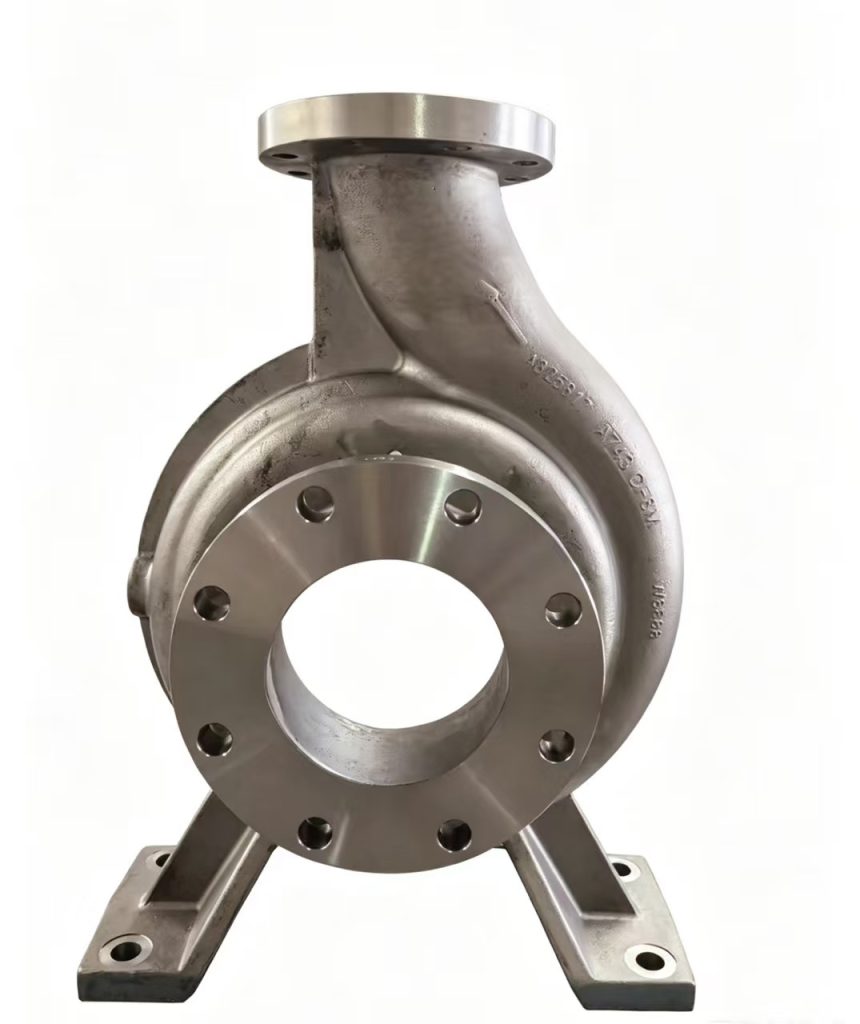
G 3175 / 3180 / 3185 heavy-duty stock pumps
YSM’s paper-stock family is published as one dimensional record: 39 sizes in four groups, from 3×6-12 to 20×20-25, with per-size outline dimensions and pump weights from 368 to 2,913 lb. Size codes read discharge × suction − size class, so an 8×10-14E discharges through 8 in and takes suction at 10 in. Hydraulic curves and construction details are issued per size against a reviewed enquiry.
| Group | Sizes | Discharge (in) | Suction (in) | Size classes | Pump weight (lb) |
|---|---|---|---|---|---|
| S | 8 | 3–8 | 6–8 | 12, 14, 16 | 368–650 |
| M | 7 | 4–12 | 6–12 | 14, 16, 19 | 545–922 |
| L | 12 | 4–14 | 8–14 | 16, 19, 22 | 700–1,765 |
| XL | 12 | 6–20 | 10–20 | 19, 22, 25 | 1,389–2,913 |
Computed from the 39-size dimensional record on the series page. The groups frame baseplate and installation questions; which size serves a duty point is decided on the model-specific curve.
Materials
Materials for pulp and paper service
Material is chosen from the full liquid analysis (pH, chlorides, oxidisers, temperature and solids), not from the liquid name. The table lists the materials usually reviewed first; the final choice is confirmed at technical review.
| Service | Main attack | Materials usually reviewed first |
|---|---|---|
| Paper stock and white water | Mild corrosion, abrasion from fibre and fillers | CF8M (316 stainless steel) or CD4MCu duplex; cast or ductile iron where corrosion is mild, for example some unbleached stock |
| Chlorine dioxide bleaching liquids and filtrate | Oxidising, chloride-bearing | Titanium or other high-alloy grades |
| Sulphuric acid for pH control and chemical preparation | Acid corrosion | CN7M (Alloy 20) |
| Black, green and white liquor | Alkaline corrosion, scaling, dregs abrasion | CF8M or CD4MCu duplex; iron or carbon steel only where temperature, solids and chlorides allow |
| Lime mud and filler slurry | Abrasion | CD4MCu duplex, or hard-metal wet-end parts where wear dominates |
YSM’s foundry casts WCB, CF8M, CD4MCu, CN7M, Hastelloy B and C, nickel, titanium and a zirconium alloy. Which of them apply to a given model and size is confirmed during technical review.
Project route
New installation or replacement?
A replacement review starts from the installed pump: nameplate and size code first, then the outline dimensions against the S / M / L / XL record, then the duty the pump actually runs today. Parts that are no longer documented can be reverse engineered from the removed part.
For a new installation
- Process and stock data
- System curve or hydraulic calculation
- Suction vessel and pipe arrangement
- Material, seal and motor requirements
- Inspection and documentation scope
For a replacement review
- Existing nameplate, model and size code
- Current curve and outline drawing
- Photos of pump and installation
- Critical interface dimensions
- Failure history and revised duty
Prepare a quotable enquiry
Send the stock, duty and suction arrangement
Include consistency, fibres, air, temperature, contaminants, operating range and existing-pump evidence where applicable.
Buyer questions
Pulp and paper pump FAQ
What pumps are used in the pulp and paper industry?
Most mill duties use centrifugal pumps. Heavy-duty end-suction stock pumps move low-consistency stock and white water; medium-consistency (MC) pumps move stock of about 8–15%; ANSI process pumps handle liquors, filtrate and bleaching chemicals; recessed-impeller and non-clog pumps take fibrous or contaminated streams; vertical sump pumps empty pits; and double-suction or vertical turbine pumps supply water. Positive-displacement pumps cover high-viscosity coating colour and metering duties, and stock above about 20% is conveyed rather than pumped.
What is a paper stock pump?
A paper stock pump is a heavy-duty end-suction centrifugal pump built for fibre suspensions. It typically has an open impeller with large passages, a generous suction nozzle, a replaceable suction-side wear plate and a back pull-out design, so the rotating assembly can be removed without disturbing the piping.
What consistency can a centrifugal stock pump handle?
Conventional centrifugal stock pumps handle low-consistency stock up to about 6%, provided the suction is designed for stock. Fluidising centrifugal MC pumps with degassing handle about 8–15%, and some designs go higher. Above about 20%, stock is conveyed rather than pumped, then diluted for pumping. The limit for a specific pump is confirmed on its curve with the actual fibre and air content.
Why does entrained air matter in stock pumping?
Air collects at the impeller eye, where it lowers head and flow and can stop delivery altogether (gas binding). Stock picks up air in agitated chests, at washers and from showers, so the expected air content and its source belong in every stock-pump enquiry.
What is the difference between a stock pump and an ANSI process pump?
ANSI/ASME B73.1 process pumps are dimensionally standardised end-suction chemical pumps; in a mill they mainly handle liquors, filtrate and chemicals, and recessed-impeller versions take fibrous or solids-laden streams. Stock pumps are built for fibre suspensions, with larger passages and suction nozzles, and run to much larger sizes: the G 3175 / 3180 / 3185 record reaches 20×20-25. See ASME B73.1 explained.
Which materials are used for pulp and paper pumps?
CF8M (316 stainless steel) and CD4MCu duplex are the usual choices for stock and white water, with cast or ductile iron where corrosion is mild. CD4MCu is also reviewed where abrasion or chlorides are higher, titanium or other high-alloy grades for chlorine dioxide bleaching liquids, and CN7M (Alloy 20) for sulphuric acid. The final material comes from the full liquid analysis, not from the liquid name.
Can a standard clean-water curve select a stock pump?
Only as a starting point. At the lowest consistencies the water curve is a fair reference; as consistency and air content rise, head and efficiency fall, so the selection is confirmed with the actual stock data, air content and suction arrangement.
What should be checked when wear is accelerating?
Review contaminants, material, speed, operating point, clearances and the system. Wear may be a material issue, a hydraulic issue or both, and the wear pattern on the removed parts is the best evidence for the next choice.
What is needed to replace an installed stock pump?
Send the nameplate and size code, the curve and outline drawing if available, photographs of the pump and installation, the critical interface dimensions, the duty data and the failure history. Parts that are no longer documented can be reverse engineered from the removed part.
Goulds, 3175, 3180 and 3185 are trademarks or model designations of their respective owner. They appear here only to identify installed pump patterns and do not indicate any affiliation, sponsorship or endorsement.