

Self-Priming Process Pump · Review-Driven Selection
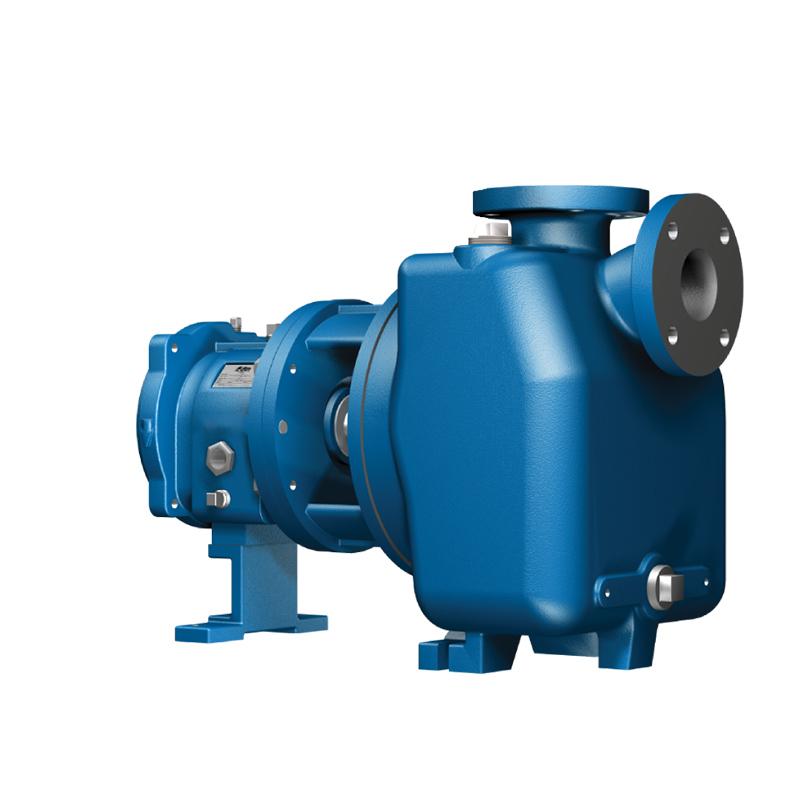
The 3796 is the self-priming enquiry path in YSM’s process-pump programme, for services where the liquid source sits below the pump and the suction line cannot stay flooded. Published here is the specification sheet’s dimensional record — eight sizes in STi and MTi frame groups with nozzle sizes, outline dimensions and bare pump weights — together with the review path for everything selection actually depends on: performance curves, priming behaviour, operating limits, materials and construction are confirmed against a reviewed enquiry, not read from a page.
The 3796 in the YSM Pump Programme
The 3796 stands where the flooded-suction families cannot: drainage, transfer and de-watering services that ask the pump to establish flow with air in the line. The reviewed source behind the page is dimensional — the 3796 specification sheet records eight sizes in STi and MTi frame groups with nozzle sizes, outline dimensions and bare pump weights, published in full below. What the source does not yet provide is an independent hydraulic or construction file, and this page states that plainly rather than dressing inferred data up as a specification, because a self-priming selection built on inference fails at the suction review anyway. Model-specific curves, priming characteristics and construction documents are supplied against a reviewed enquiry.
Series context
G196 Series ANSI Process Pumps
The open-impeller ANSI chemical programme where flooded-suction chemical and process duties are reviewed. If the suction can stay flooded, start there — a flooded suction never needs a priming cycle.
View the G196 SeriesThe other self-priming path
Unitized Self-Priming Process Pump
A second self-priming pattern carried as its own enquiry page. Which pattern fits an installation is decided during review — send the duty and suction data rather than a model name.
View the Unitized Self-Priming pageTechnical Data Status
An honest status table converts better than a retyped datasheet: it tells a reviewer exactly which numbers this page will and will not stand behind. The dimensional record from the 3796 specification sheet is published in the Group and Size Coverage section below; everything hydraulic follows the reviewed enquiry.
| Information | Status | Required action |
|---|---|---|
| Flow, head and efficiency | Not independently verified in the reviewed source | Select on an approved 3796 curve during review |
| Priming lift and priming time | Not independently verified — no lift figure is published | Review the complete suction installation |
| Temperature and pressure limits | Not independently verified | Confirm from the selected size and construction |
| Outline dimensions and bare pump weights | Published below from the 3796 specification sheet, in inches with millimetres in parentheses | Confirm against the approved installation drawing before use |
| Materials, seals and construction | Model-specific documentation pending | Request a reviewed datasheet and drawing |
Statements of non-publication are deliberate: they mark where model-specific documents take over, not gaps to be papered over with catalogue prose.
What Self-Priming Means in Service
Self-priming changes what an enquiry must describe. A standard centrifugal pump assumes a flooded suction; a self-priming pump is asked to establish flow with air in the line and the liquid below the pump — and that difference moves the review from the pump alone to the complete suction system.
The priming cycle
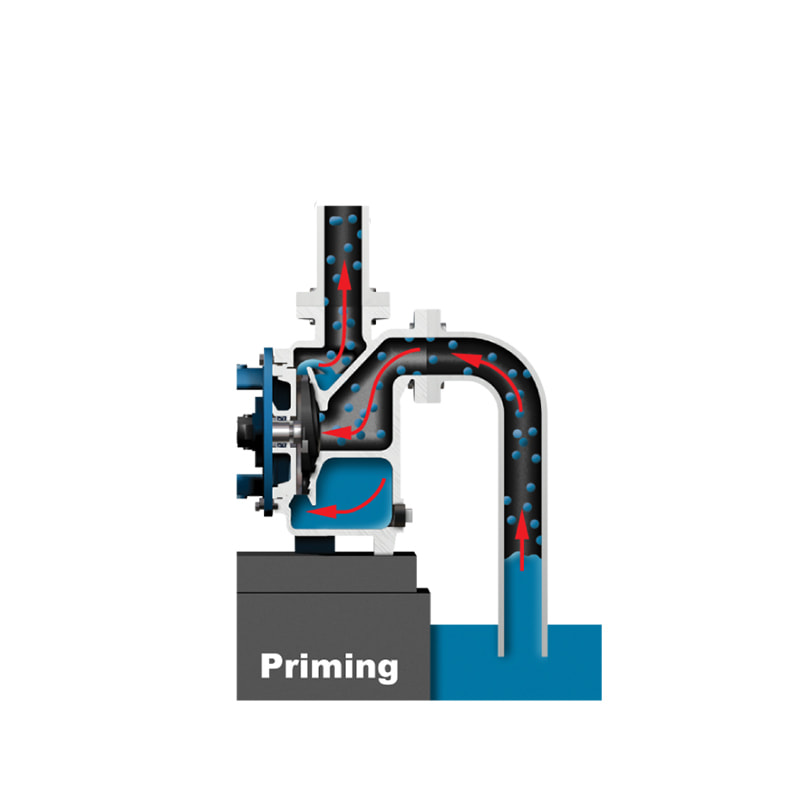
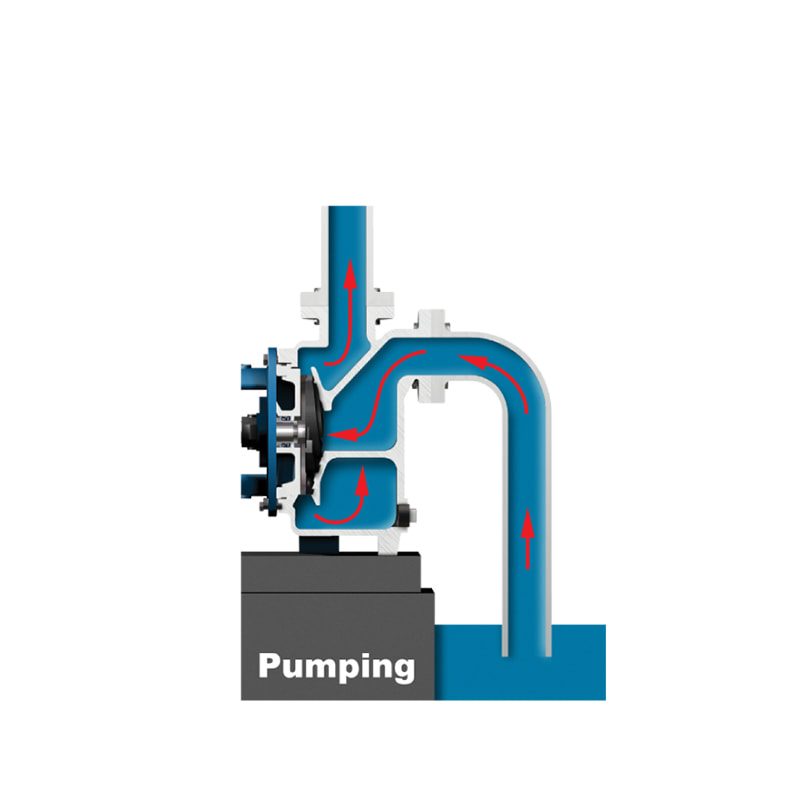
A self-priming centrifugal pump establishes flow by retaining priming liquid in the casing, handling air during the priming cycle and settling into normal pumping once the suction line is evacuated. It is not dry-running: the casing must keep its priming charge, re-priming after shutdown depends on the installation, and the seal environment during the cycle is part of the review. How priming liquid is retained or replenished is stated in the enquiry, not assumed.
The process duty after priming
Once primed, the 3796 is reviewed like any other process pump: flow, head, liquid properties, solids and temperature against a model-specific curve. The suction system remains the defining constraint — static lift, line volume and diameter, fittings, vapour pressure and air-leak risk decide priming behaviour, which is why no lift figure is quoted on this page. The NPSH and cavitation guide and the pipe friction and system head guide prepare that part of the enquiry.
Where the 3796 Runs
The recurring duty patterns behind self-priming enquiries, each linked to the guide that prepares a reviewed enquiry for it. The duty label starts the conversation; feasibility is decided on the reviewed suction system.
Sump, pit and tank-transfer duties
Drainage and transfer services where the liquid source sits below the pump — sumps, pits, tanks and loading points in chemical and general process plants. Chemical transfer application guide →
Industrial wastewater and de-watering transfer
Wastewater transfer and de-watering duties where the level changes, the suction cannot stay flooded and air reaches the line as part of normal operation. Wastewater transfer guide →
Replacement of installed self-priming pumps
Repair-or-replace decisions and the parts path for self-priming process pumps already in service, reviewed from nameplate and dimensional evidence. Repair or replace guide →
Group and Size Coverage
3796 size codes read discharge × suction followed by a size-class number: a 1×1.5-6 discharges through 1 in and takes suction at 1.5 in — the sheet’s own discharge and suction columns record the nozzle sizes against each designation. The STi and MTi frame groups organise the eight sizes dimensionally: where the sheet records one value across neighbouring sizes, the table shows it once spanning those rows, exactly as published. The A, B, D, E and X columns are the sheet’s outline dimensions in inches with millimetres in parentheses; the locations they measure are confirmed on the model-specific installation drawing during review.
| Group | Size | Discharge (in) | Suction (in) | A | B | D | E | X | Bare pump weight lb (kg) |
|---|---|---|---|---|---|---|---|---|---|
| STi | 1×1.5-6 | 1 | 1.5 | 15.5 (394) | 5 (127) | 7.5 (191) | 4 (102) | 7.25 (184) | 170 (77) |
| 1.5×1.5-8 | 1.5 | 1.5 | 7.875 (200) | ||||||
| MTi | 2×2-10 | 2 | 2 | 21.75 (552) | 6.5 (165) | 10 (254) | 6 (152) | 10 (254) | 270 (123) |
| 3×3-10 | 3 | 3 | 22.625 (575) | 6.75 (171) | 315 (143) | ||||
| 4×4-10 | 4 | 4 | 23.375 (594) | 9.1875 (233) | 370 (168) | ||||
| 3×3-13 | 3 | 3 | 22.625 (575) | 6.75 (171) | 11.5 (292) | 400 (182) | |||
| 4×4-13 | 4 | 4 | 23.375 (594) | 9.1875 (233) | 470 (214) | ||||
| 6×6-13 | 6 | 6 | 15.25 (387) | 10 (254) | 14 (356) | 8 (203) | 14 (356) | 690 (314) |
Values are reproduced as published in the 3796 specification sheet. Read the table as dimensional coverage, not hydraulic commitment: which size serves a duty point is decided on the approved curve during review, and installation work uses the approved drawing, not a web table.
Materials, Seals and Construction
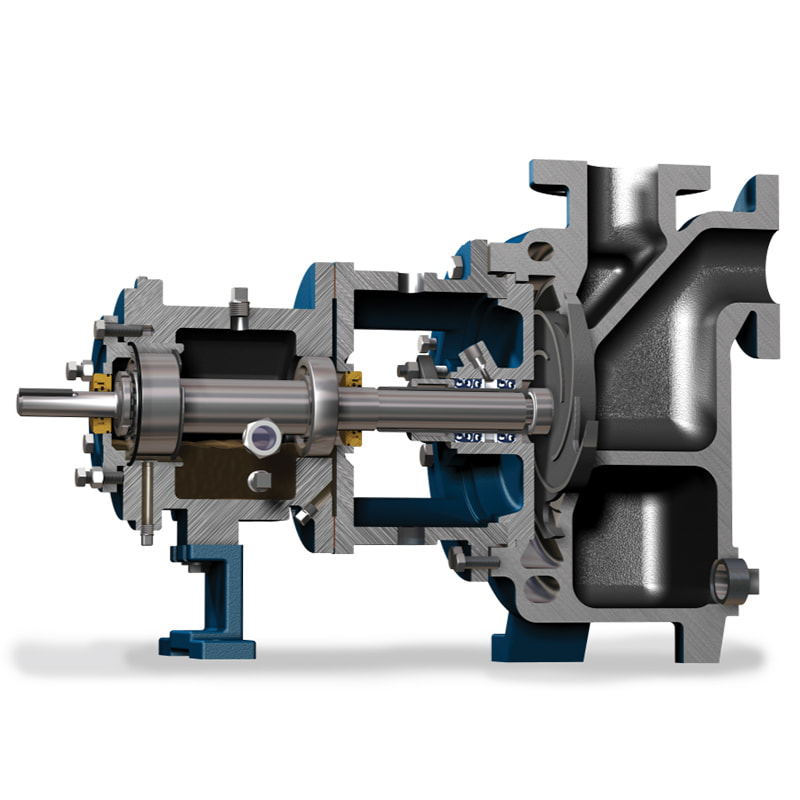
Two things are true at once, and this section keeps them separate. YSM’s manufacturing base carries a wide wet-end material capability — the foundry and machining programme behind all families runs sand, lost-foam and V-process casting with dynamic balancing of every impeller and pressure testing of every casing, in materials from WCB and 316SS/CF8M through CD4MCu duplex and Alloy 20/CN7M to Hastelloy B and C, Nickel, Titanium and Zirconium alloy. At the same time, the current 3796 source does not map those materials to individual sizes or components, and seal, shaft, impeller and casing construction details are likewise not independently documented in the reviewed extract.
Company-level capability
Ferrous and corrosion-resistant wet-end alloys, patterns and drawings held in house, inspection reports with tracking records, and fitness testing of finished parts — documented in the factory review.
Model-level confirmation
Which material, seal arrangement and construction options apply to a given 3796 size is confirmed during technical review against model-specific documents. State the liquid data, temperature and any abrasive or corrosive contaminants in the enquiry; the material conversation starts from the service, not from the alloy list.
Do not infer per-size availability from the company-wide material list. Material, seal and construction options remain pending model-specific technical confirmation.
Parts, Reverse Engineering and Replacement Scope
A self-priming pump often earns its keep in unglamorous services — sumps, wastewater, intermittent transfer — which makes the parts path as commercially important as the new-pump path. YSM keeps its own drawings and patterns, and works in reverse from customer drawings or physical samples where the original documents are gone — the standard route for wet-end parts on installed pumps of this pattern. Scope is configurable from complete pumps down to individual replacement parts, and OEM / ODM programmes follow the same review discipline as everything else — see About YSM Pumps and the replacement parts programme.
What the parts path does not include is a paper promise: no interchange claim is made on this page, and any fit or cross-reference conclusion is issued only after the model, dimensions, materials and revision are reviewed. For pump-down situations, the fastest route is a nameplate photo and a short description of the failed parts — the review returns a confirmed proposal rather than a guess. Finished orders ship with inner cartons plus non-fumigation wooden export crates as the standard packaging mode.
Dimensions, Documentation and Review
The published record for the 3796 is dimensional: eight sizes across the STi and MTi frame groups, nozzle sizes, the A, B, D, E and X outline values in inches with millimetres in parentheses, and bare pump weights from 170 lb (77 kg) to 690 lb (314 kg) — use them for early rigging and baseplate planning. Model-specific performance curves, priming characteristics, operating limits, seal arrangements and installation drawings follow the reviewed enquiry — releasing unconfirmed figures is how mis-selections happen, so the sequence is deliberate. Packed shipping weights with baseplate, motor and crate follow the order documents.
Interchange guides: G196 vs Goulds 3196 — what ASME B73.1 fixes and what is confirmed before order · Goulds 3196 replacement manufacturers compared.
3796 Self-Priming FAQ
Are performance curves or operating limits published for the 3796?
No. The reviewed source publishes a dimensional record — frame groups, nozzle sizes, outline dimensions, bare weights — not approved curves or limits. Flow, head, efficiency, temperature and pressure are confirmed on the model-specific curve and datasheet during review, never read from this page.
What priming lift can the 3796 achieve?
No lift figure is published here. Effective lift is a property of the complete suction system — static lift, line volume and diameter, fittings, liquid temperature and vapour pressure, air-leak risk — so it is reviewed against the installation rather than quoted as a single number.
Does self-priming mean the pump can run dry?
No. A self-priming centrifugal pump establishes flow by retaining priming liquid in the casing and handling air during the priming cycle. Loss of the priming charge, extended dry operation and the seal environment during priming are review items, not covered capabilities.
What suction information does a self-priming enquiry need?
Static lift, pipe length and diameter, fittings and elevation changes, the liquid’s temperature and vapour conditions, air-leak risk, how priming liquid is retained or replenished, and the installation layout. The suction system decides feasibility, so it carries as much weight in review as the duty point itself.
How does a size code like 1×1.5-6 read?
Discharge × suction, then a size-class number: a 1×1.5-6 discharges through 1 in, takes suction at 1.5 in and sits in the family’s 6 class — the sheet’s discharge and suction columns record the nozzle sizes per designation. Confirm the exact designation during review; neighbouring codes are not interchangeable selections.
What do the STi and MTi groups mean?
They are frame groups from the specification sheet organising the eight sizes. Sizes within a group share several outline values in the record, so the group frames baseplate and installation questions; it is not a performance class. Commonality with other YSM frame programmes is confirmed during review, not assumed from the name.
Can the published dimensions be used for installation?
Only after the exact size and configuration are confirmed during review. The sheet publishes inches with millimetres in parentheses; installation work uses the approved model drawing, not a web table.
What do the published weights cover?
The sheet records a bare pump weight per size, from 170 lb (77 kg) at 1×1.5-6 to 690 lb (314 kg) at 6×6-13. Use them for early rigging and baseplate planning; packed shipping weights with baseplate, motor and export crate follow the order documents.
Can material be selected from the liquid name?
No. Composition, concentration, temperature, pressure, impurities, solids and the exact wetted components must be reviewed. The company-level alloy capability runs from WCB and 316SS/CF8M to Hastelloy, Nickel, Titanium and Zirconium alloy, but per-size availability is confirmed during review — send the liquid data rather than an alloy name.
Can you supply parts for an installed 3796-pattern pump?
Yes — through the reverse-engineering path: YSM keeps its own drawings and patterns and works from customer drawings or samples where originals are gone. A nameplate photo, drawing or sample carries the review; no fit or cross-reference conclusion is issued from a model designation alone.
Are OEM or branded (ODM) orders supported?
Yes — OEM and ODM programmes are part of the standard offer (see About YSM Pumps). Branding, documentation and packaging requirements enter the same technical-commercial review as the pump itself; state them in the enquiry rather than after order.
How is pricing confirmed?
Quotations are issued against a reviewed selection — size, materials, sealing, scope and quantity — not against a designation alone, which is why no public price list exists for the 3796. Send the duty and suction data with the requirements; the quotation then references the reviewed configuration it prices.
What are the lead time and warranty for this pump?
Typical lead time is 4 weeks for a complete pump, 2 weeks for a bare wet end and 1 week for replacement parts, from deposit and approved drawings. Warranty is 12 months from shipment against defects in materials and workmanship within the reviewed duty. Late shipment attributable to YSM is compensated at 0.5% of contract value per week, capped at 5%.
What are the payment and delivery terms?
30% T/T deposit within 7 days of order, 70% T/T before shipment, or irrevocable L/C at sight; export-grade wooden-case packing; any Incoterms 2020 term (EXW Zibo, FOB Qingdao, CIF, DAP/DDP) as agreed in the quotation. Factory witness testing and third-party inspection (SGS, BV, TÜV) are accepted. Full terms: Commercial Terms
Request a 3796 Quote
The form below carries the initial request; drawings, nameplate photos and any remaining data can follow during review. The technical review uses, where available: the duty point (normal, minimum and maximum flow with required head), the liquid description (composition, concentration, temperature, density, viscosity, solids), the complete suction system (static lift, line length and diameter, fittings, elevation changes, air-leak risk, how priming liquid is retained or replenished), material and seal preferences, motor voltage and frequency, quantity, documentation needs, destination and target delivery date. For replacement work, add the existing model designation and size, a nameplate photo and any drawing, curve or sample availability.
Open “Add technical details” to fill in what you know, and mark anything uncertain as unknown — a marked gap is reviewable, a silent one is not.
Pump RFQ
Replied by the technical team with the reviewed model, size and quotation scope.
3796 Selection Decision Guide
Selection boundaries save both sides a review cycle: the fastest quotation starts on the right page. The 3796 is the self-priming answer inside YSM’s process-pump programme — crossing to another page is not a downgrade, it is a different answer to a different duty.
Start with the 3796 when
- The liquid source sits below the pump, or the suction line cannot stay flooded in normal operation.
- The duty is sump, pit, tank-transfer or de-watering service and the enquiry can describe the complete suction system.
- An installed self-priming process pump needs parts, a repair-or-replace decision or a like-for-like review.
Review another page when
- The suction stays flooded and the duty is corrosive chemical transfer on the ANSI B73.1 pattern: review the G196 Series (open impeller) or the D Mark III Series (reverse vane).
- The duty is paper stock or a high-volume heavy-duty process service: that is the G 3175 / 3180 / 3185 Series review.
- The stream is raw sewage, grit or thickened sludge: that is a solids-handling review, stated as such in the wastewater transfer guide — self-priming does not make a pump a trash pump.
Self-Priming Application Guides
Use the chemical transfer application guide, the wastewater transfer guide, the NPSH and cavitation guide and the repair-or-replace decision path to prepare a reviewed enquiry.