
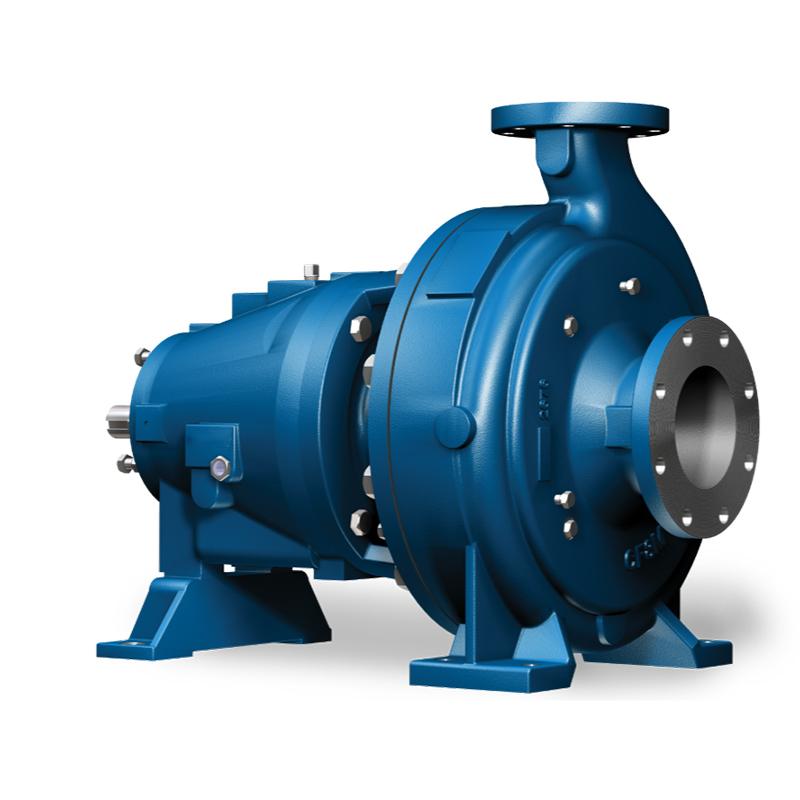

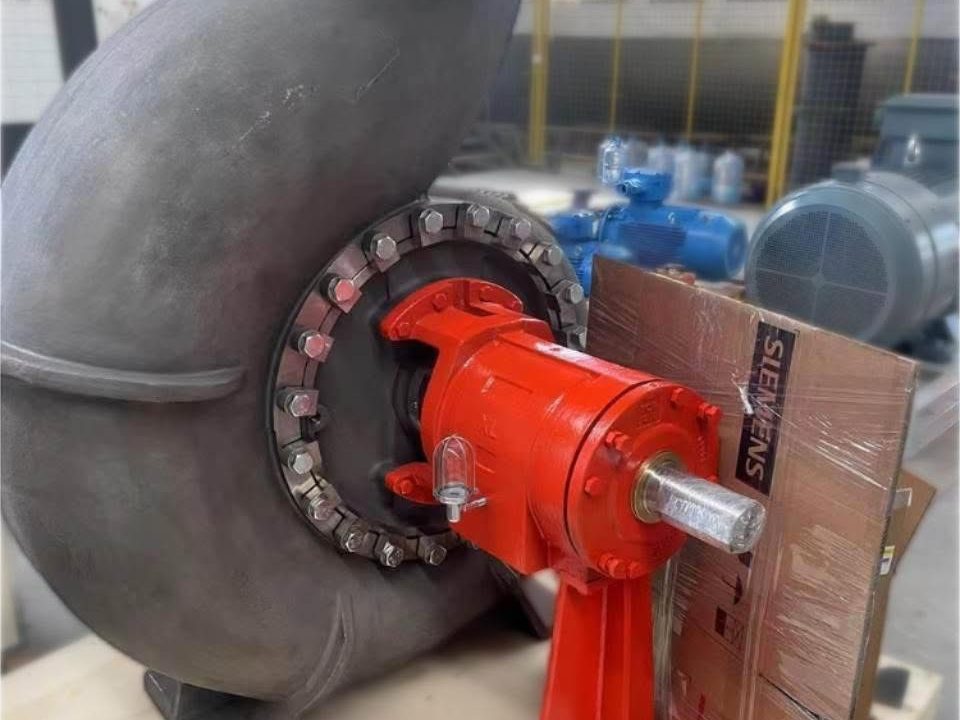
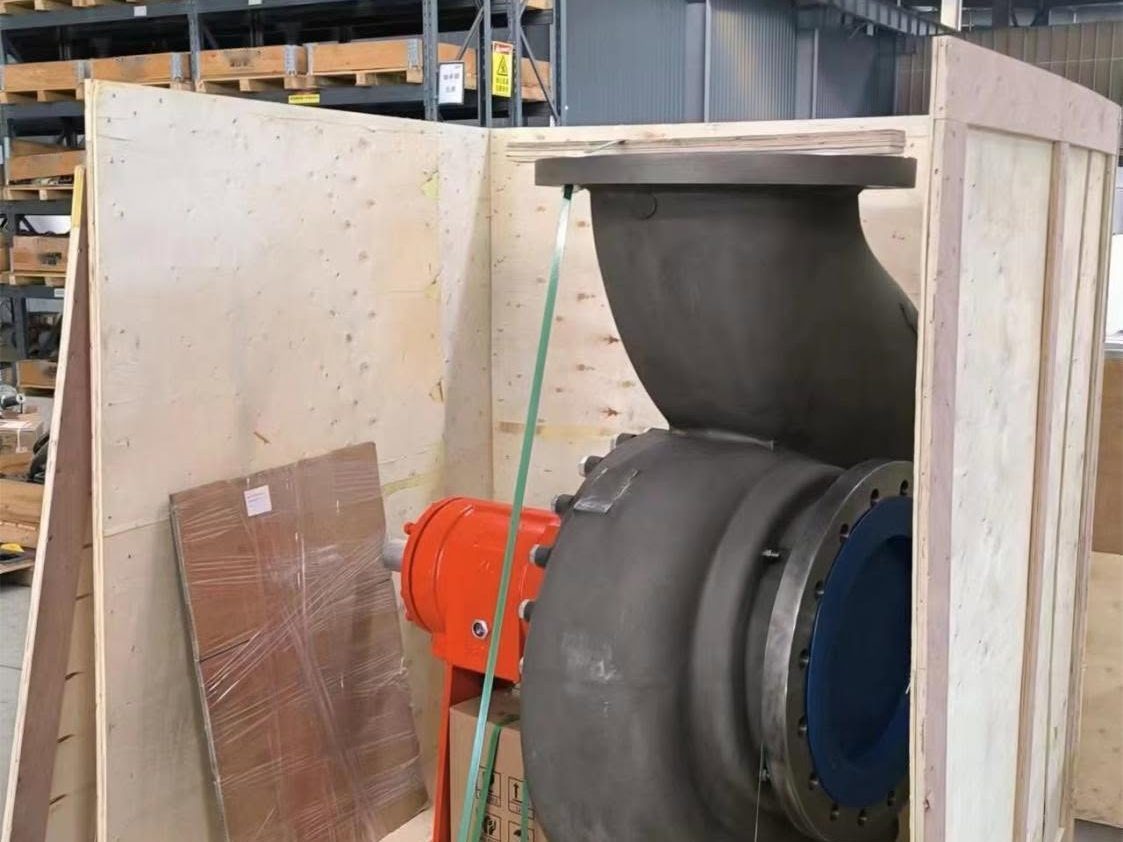
G 3175 / 3180 / 3185 Series · G 3175
The G 3175 is the current model-level entry within YSM’s paper-stock and heavy-duty process-pump family. The reviewed source confirms shared S/M/L/XL dimensional coverage and pump weights, but does not provide a G 3175-specific hydraulic envelope, impeller design or material matrix — so this page publishes the review path rather than a retyped catalogue: duty, stock or liquid data and installation in; reviewed model assignment, curve and drawings out.
The G 3175 in the YSM Pump Programme
The G 3175 stands where the ANSI chemical families end: paper stock, fibrous process liquids and heavy-duty services whose hydraulic requirement is set by consistency, fibre and entrained air rather than by a clean-liquid duty point. The family record — the full 39-size dimensional table, the outline reference drawing and the build views — is published on the series page; this page is the model-level enquiry path, and it states plainly what the source does and does not confirm for the G 3175 itself.
Series context
G 3175 / 3180 / 3185 Series
The family page carries the complete reviewed dimensional record — S/M/L/XL groups, nozzle sizes, D/X/Z/B/A/SP outline dimensions and per-size weights for all 39 sizes — plus the outline drawing and construction views.
View the G 3175 / 3180 / 3185 SeriesBoundary
ANSI Chemical Process Families
If the duty is clean corrosive chemical transfer on the B73.1 pattern rather than stock or heavy-duty service, the honest starting point is the G196 Series (open impeller) or the D Mark III Series (reverse vane) — a different family is a different answer to a different duty.
Quick Selection Summary
| Product family | G 3175 / 3180 / 3185 | Position | Paper-stock / heavy-duty process |
|---|---|---|---|
| Source groups | S, M, L, XL | Source size coverage | 3×6-12 to 20×20-25 |
| Published weights | 368–2913 lb across the series table | Hydraulic range | Pending approved model-specific curves |
Size and weight figures describe the shared series source table. They must not be treated as confirmation that every listed size is a G 3175 configuration.
Technical Data Status
An honest status table converts better than a retyped catalogue: it tells a reviewer exactly which numbers this page will and will not stand behind, and where the model-specific documents take over.
| Information | Status | Required action |
|---|---|---|
| Flow, head and efficiency | No approved G 3175 performance curve in the reviewed source | Select on model-specific hydraulic data during review |
| Model-to-size mapping | S/M/L/XL data is shared G 3175 / 3180 / 3185 family data | Confirm the exact model assignment during review |
| Impeller design and construction | Not verified in the reviewed source for this model | Confirm from model-specific construction documents |
| Materials, seals and shaft design | No G 3175-specific matrix — the company-wide alloy list does not apply automatically | Confirm against the complete process conditions |
| Outline dimensions and weights | Published at family level on the series page; the extract leaves the dimensional unit unstated | Request the approved drawing confirming model, group, size, figure and units |
Statements of non-publication are deliberate: they mark where model-specific documents take over, not gaps to be papered over with catalogue prose.
Where the G 3175 Review Starts
The recurring duty patterns behind G 3175 enquiries, each linked to the guide that prepares a reviewed enquiry for it. The duty label starts the conversation; model assignment is decided on the reviewed data.
Paper-stock line pumping
Stock preparation and approach-line duties where consistency, fibre and entrained air set the hydraulic requirement — provide stock consistency, fibre and solids data with the full duty point. Pulp and paper pumps guide →
High-volume and slurry-type process duties
Heavy-duty services outside the paper machine where solids and viscosity move the duty away from clean-liquid assumptions, and the installation may fall within the listed S/M/L/XL dimensional families. Viscosity and slurry selection guide →
Replacement of installed heavy-duty stock pumps
Repair-or-replace decisions and the parts path for pumps of this dimensional pattern already in service, reviewed from nameplate and drawing evidence. Repair or replace guide →
Group Coverage
Family size codes read discharge × suction followed by a size-class number: an 8×10-14E discharges through 8 in and takes suction at 10 in, with a letter suffix marking a variant recorded in the source. The S, M, L and XL groups organise the size list dimensionally — sizes in a group share closely related mounting values, so the group frames baseplate and installation questions while hydraulic behaviour remains size-specific.
| Group | Representative size span | Published weight range |
|---|---|---|
| S | 3×6-12 to 4×6-16 | 368–650 lb |
| M | 6×8-14 to 4×6-19 | 545–922 lb |
| L | 6×10-16 to 8×10-22 | 700–1765 lb |
| XL | 12×14-19 to 20×20-25 | 1389–2913 lb |
See the complete reviewed 39-size dimensional table on the series page — published weights support early rigging and baseplate planning; packed shipping weights follow the order documents.
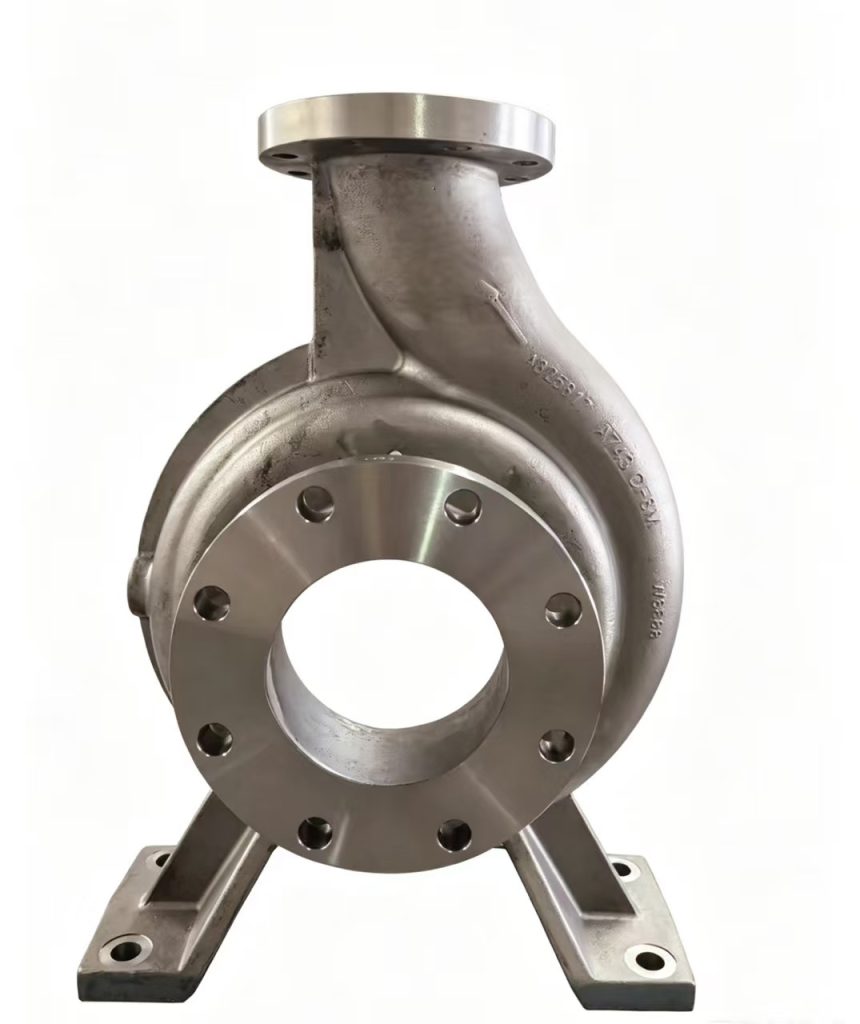
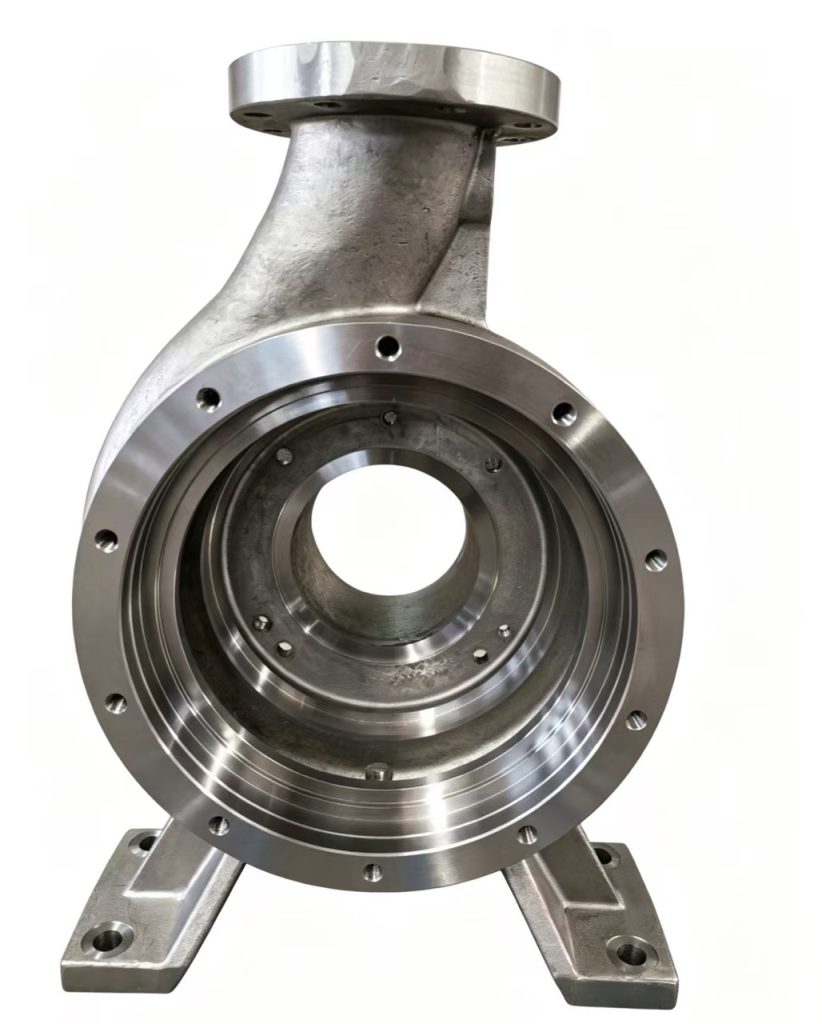
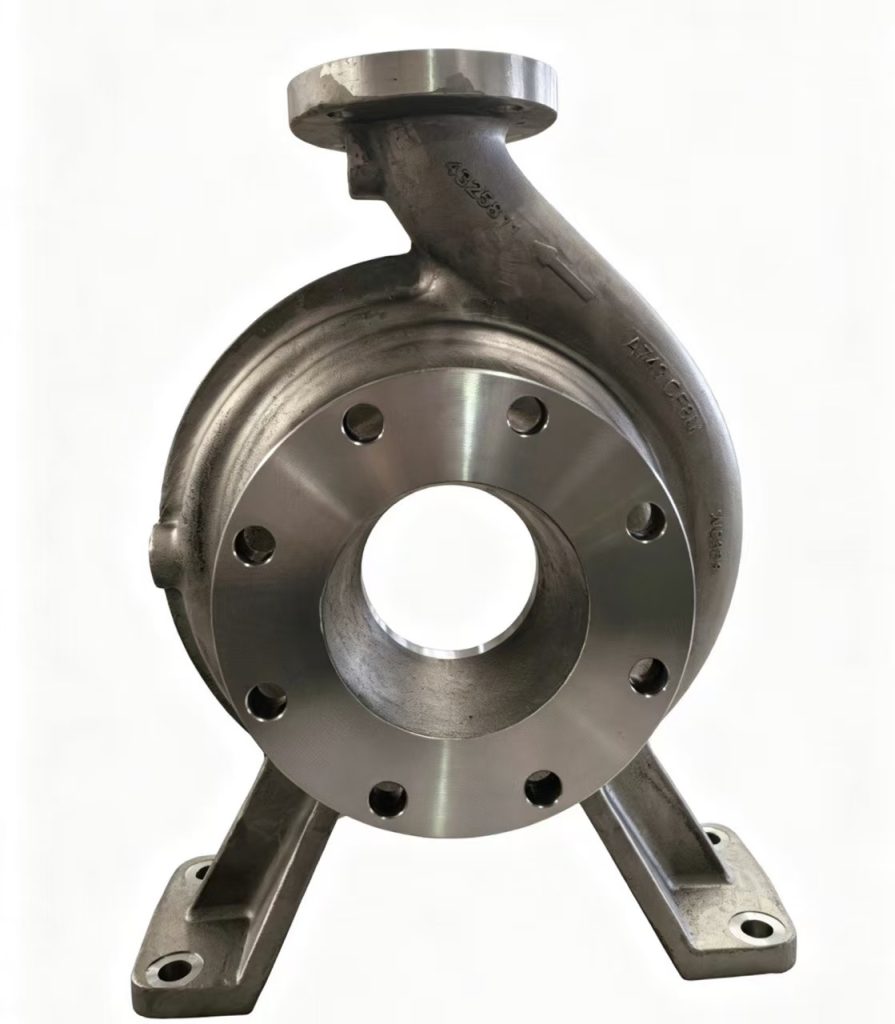
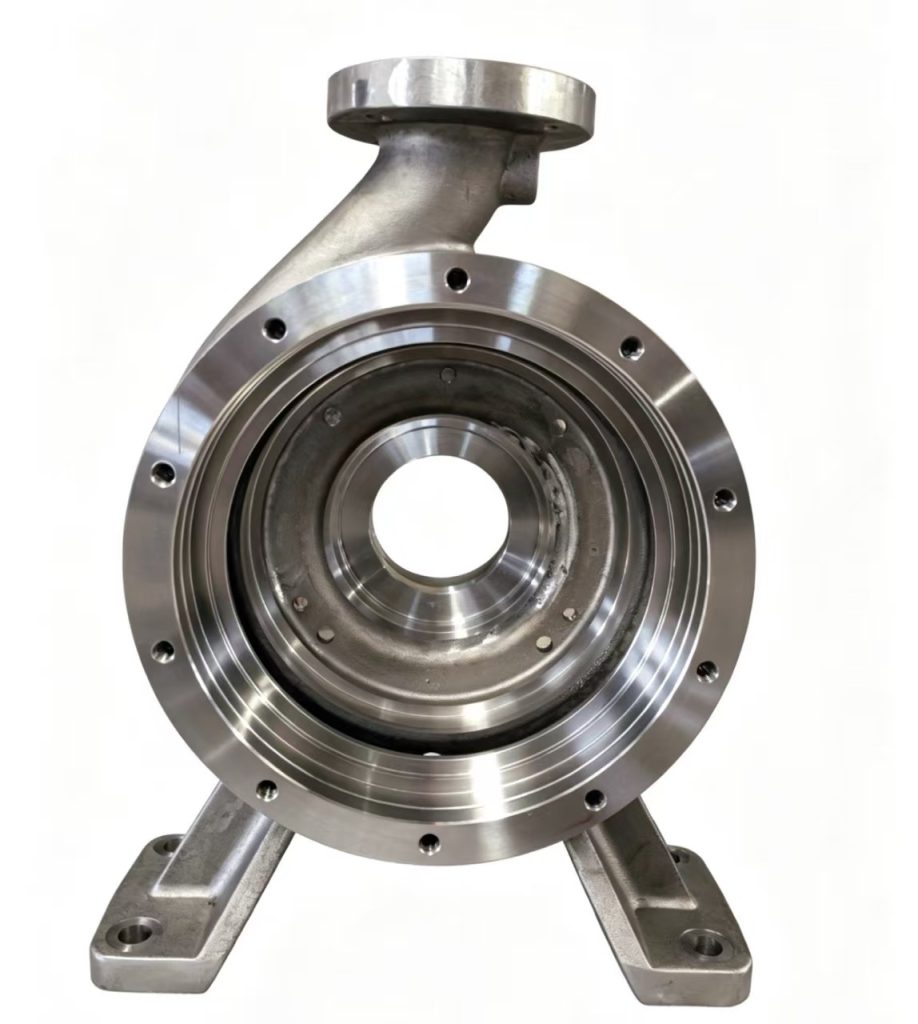
G3175 3×6-12 and 4×6-12 casings (Group S) in CF8M from the YSM works, front and back views. Nozzle sizes, flange facing and tappings are finished to the order drawing.
Selection Data Required
A stock-pump review stands on three legs, and the enquiry that carries all three closes in one cycle.
Duty point
Minimum, normal and maximum flow; required head; operating schedule and control method.
Stock or liquid
Composition, consistency/concentration, fibre and solids data, viscosity, temperature and density.
Installation
Suction conditions, elevation, piping context, motor supply, baseplate/coupling scope and destination.
Dimensions and Drawings
The series source provides dimensions D, X, Z, B, A and SP plus nozzle sizes and weights, published in full on the series page. Before installation, request an approved drawing that confirms the exact model, group, size, figure and dimensional units — the extract leaves the unit unstated, and releasing unconfirmed numbers is how installation errors happen. For installed pumps of this pattern, a nameplate photo and a short description of the failed parts is the fastest parts route — the urgent parts RFQ checklist collects everything in one request.
G 3175 FAQ
What data is required to select a G 3175?
Send flow/head, stock or liquid details, consistency or concentration, fibre and solids data, viscosity, temperature, suction conditions, operating schedule and motor supply. The stock data carries as much weight as the duty point — consistency and entrained air change the hydraulic answer.
Are flow and head limits confirmed on this page?
No. The reviewed source does not contain an approved G 3175 performance curve. Final selection requires model-specific hydraulic data, supplied during review — flow and head are never read from the dimensional table.
Are all S/M/L/XL sizes G 3175 configurations?
The source presents them as shared G 3175 / 3180 / 3185 family data. Exact model-to-size mapping still requires confirmation during review — the table is dimensional coverage, not a per-model catalogue.
How does a size code like 8×10-14E read?
Discharge × suction, then a size-class number: an 8×10-14E discharges through 8 in, takes suction at 10 in and sits in the family’s 14 class. A letter suffix (E) marks a variant recorded in the source. Confirm the exact designation during review.
What do the S, M, L and XL groups mean?
They are dimensional groups organising the size list. Within a group the source records closely related mounting values, so the group frames baseplate and installation discussion; it is not a performance class. Hydraulic behaviour is decided size by size on model-specific data.
How are materials and seals selected?
They require the complete process conditions and model-specific construction documents. No compatibility conclusion is made from the material name alone, and the company-wide alloy list does not apply to this model automatically — send the stock or liquid data and let the review propose the options.
What are the published weights for?
Early rigging and baseplate planning. They are bare-pump figures from the family table; packed shipping weights with baseplate, motor and crate follow the order documents, and installation dimensions are confirmed on the approved drawing.
Can you supply parts for an installed pump of this pattern?
Yes — through the reverse-engineering path: YSM keeps its own drawings and patterns and works from customer drawings or samples where originals are gone. A nameplate photo, drawing or sample carries the review; no fit or cross-reference conclusion is issued from a model designation alone.
Are OEM or branded (ODM) orders supported?
Yes — OEM and ODM programmes are part of the standard offer (see About YSM Pumps). Branding, documentation and packaging requirements enter the same technical-commercial review as the pump itself; state them in the enquiry rather than after order.
How is pricing confirmed?
Quotations are issued against a reviewed selection — model assignment, size, materials, sealing, scope and quantity — not against a family label alone, which is why no public price list exists. Send the duty, stock and installation data; the quotation then references the reviewed configuration it prices.
What are the lead time and warranty for this pump?
Typical lead time is 4 weeks for a complete pump, 2 weeks for a bare wet end and 1 week for replacement parts, from deposit and approved drawings. Warranty is 12 months from shipment against defects in materials and workmanship within the reviewed duty. Late shipment attributable to YSM is compensated at 0.5% of contract value per week, capped at 5%.
What are the payment and delivery terms?
30% T/T deposit within 7 days of order, 70% T/T before shipment, or irrevocable L/C at sight; export-grade wooden-case packing; any Incoterms 2020 term (EXW Zibo, FOB Qingdao, CIF, DAP/DDP) as agreed in the quotation. Factory witness testing and third-party inspection (SGS, BV, TÜV) are accepted. Full terms: Commercial Terms