
Low-flow application guide
Low-Flow Process Pumps
A low process flow does not simply mean choosing the smallest standard pump. When a conventional pump is forced too far below its best-efficiency region, internal recirculation, heat, vibration and seal wear can turn a stable-looking duty into a maintenance problem.

Who this page helps
Low-flow questions from four perspectives
Use the route that matches your responsibility, then send the same operating evidence so the selection can be checked consistently.
Plant maintenance
Investigating heat, vibration, recurring seal failures or unstable operation on a throttled pump.
Process & EPC teams
Defining minimum, normal and maximum duty points before specifying the hydraulic route.
Skid builders
Balancing control range, bypass strategy, motor load and system resistance.
Replacement enquiries
Checking whether a chronic problem is hydraulic, system-related or dimensional.
Failure-mode first
What happens too far below BEP
Throttling changes system resistance, but it does not turn an oversized hydraulic into a purpose-designed low-flow pump.
Internal recirculation
Flow can separate and circulate inside the impeller and casing instead of moving smoothly through the pump.
Radial thrust
Off-design pressure distribution can increase shaft deflection and load the bearings and seal.
Temperature rise
Low through-flow removes less heat, which matters especially in intermittent or closed-valve operation.
Low-flow cavitation
Local recirculation and pressure changes can create noise and damage even when suction data appears reasonable.
Seal and bearing wear
Vibration, heat and shaft movement often appear downstream as shorter component life.
Selection evidence
Send the operating range, not one point
A dedicated low-flow route should be reviewed against the system and every expected operating point.
Understand system curve, BEP and low-flow operation →Hydraulic duty
Minimum, normal and maximum flow; total dynamic head at each point; frequency and duration of low-flow operation; fixed speed, VFD or control valve.
Liquid data
Liquid name, concentration, temperature, density, viscosity, vapour pressure and any solids or crystallization tendency.
Suction conditions
Flooded or lift suction, minimum liquid level, tank pressure, pipe size and length, fittings, site elevation and NPSH available if known.
Existing-pump evidence
Nameplate, size, speed, curve, valve position, operating symptoms and maintenance history for replacement reviews.
Dedicated product routes
Low-flow hydraulics for reviewed process duties
Final size, speed, operating range, material and seal arrangement remain subject to the confirmed process data.
G196 Low Flow
A dedicated low-flow process-pump route for duties that should not be served by pushing a conventional hydraulic far left of its preferred range.
- Application-specific curve review
- Multiple material routes
- Seal arrangement selected by liquid
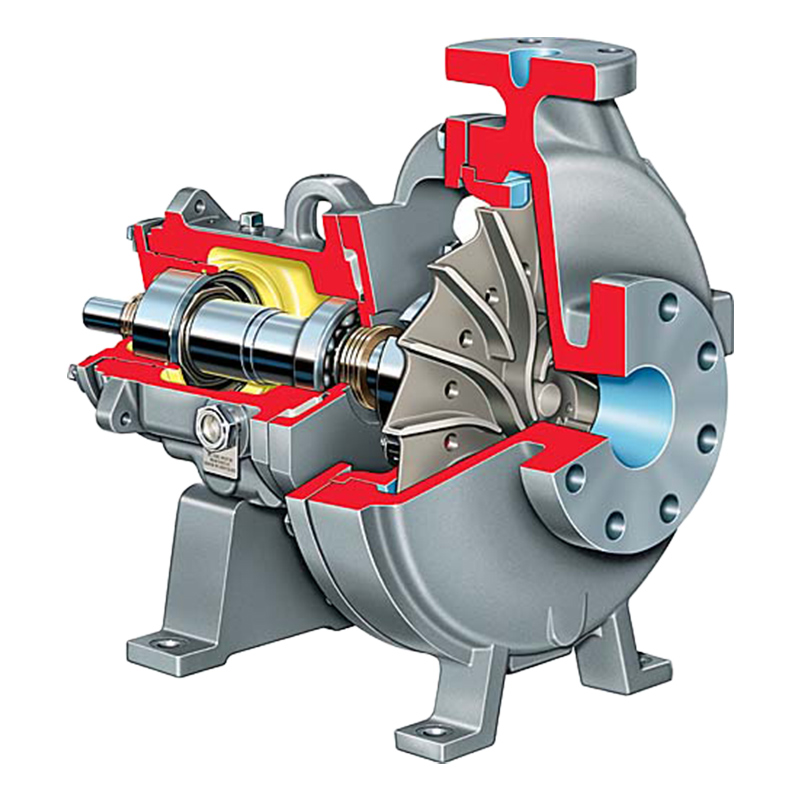
D Mark III Low Flow
An alternative dedicated low-flow platform for reviewed corrosive and industrial process applications.
- Full operating range checked
- Materials matched to service
- Dimensional review available
Ready for a hydraulic review?
Send minimum, normal and maximum duty points
Include the liquid, suction arrangement, control method and any current operating symptoms. We will identify the information still needed before a model or curve is confirmed.
Buyer questions
Low-flow pump FAQ
Can I solve a low-flow duty by throttling a larger pump?
Sometimes a control valve is part of a sound system design, but persistent heavy throttling can leave the pump far from its preferred operating region. The full range and system curve must be checked.
Is there a universal minimum continuous flow?
No. The limit depends on the specific pump, speed, hydraulic design, liquid and operating conditions. Ask for the allowable operating range on the selected curve.
Does a VFD always fix an oversized pump?
No. Speed reduction changes the pump curve and can help, but motor cooling, minimum speed, system static head and the hydraulic operating region still require review.
What data is most important for a low-flow selection?
Minimum, normal and maximum flow with corresponding head, liquid data, suction conditions, speed/control method and the duration of each operating condition.